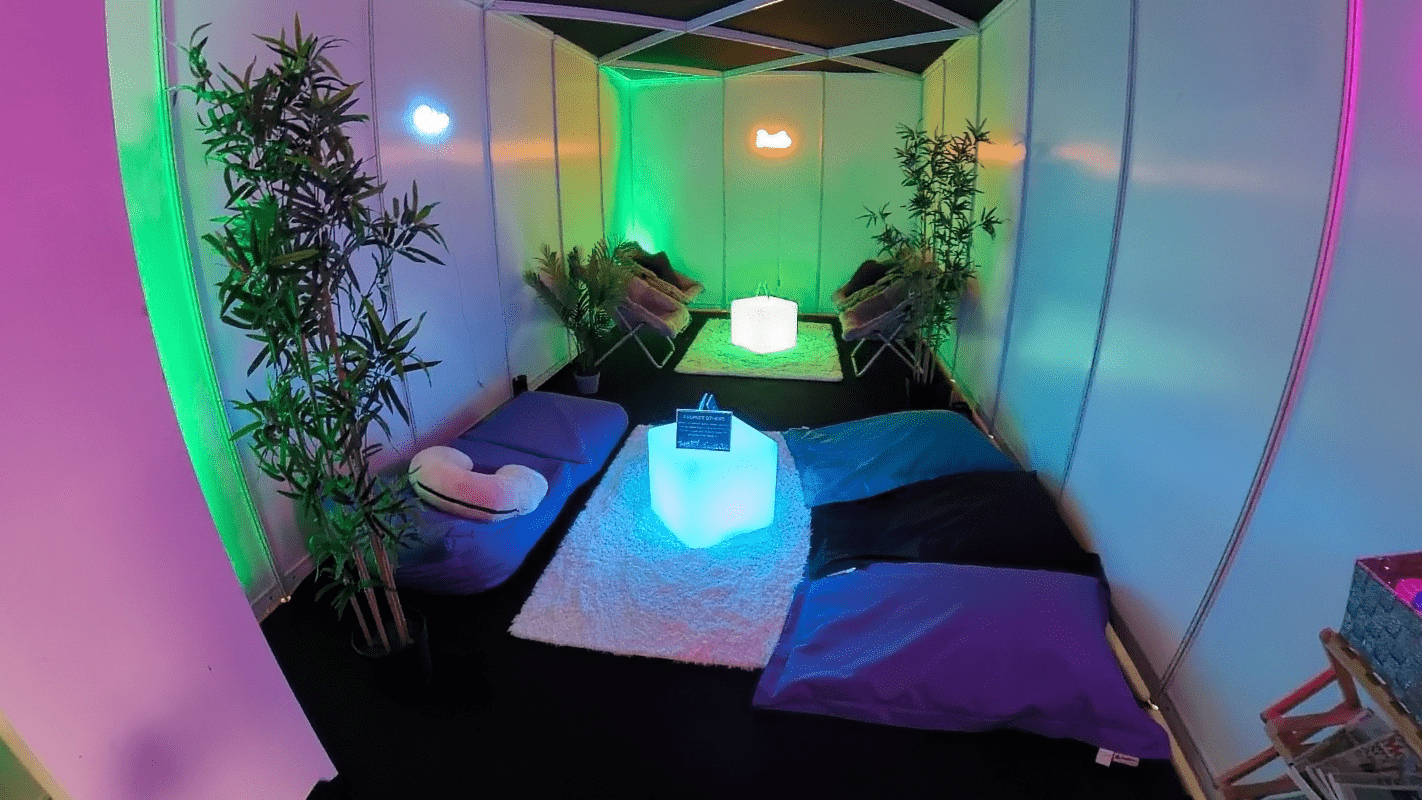
Designing Events for Brains – not just budgets!

In the events industry, we talk a lot about budgets; margins, footfall, ROI, delegate numbers, square metre costs – all important, all necessary, but we don’t talk nearly enough about brains. The nervous systems moving through our spaces, the sensory load of conferences, the cognitive exhaustion of festivals, the emotional labour of networking, the quiet…

Why Supervised Quiet Rooms Aren’t Optional — They’re a Legal, Safety and Safeguarding Requirement

Quiet rooms are rapidly becoming a core part of modern event design, and that’s a good thing. They give attendees a safe, calm space to step away from sensory overload, emotional overwhelm, or the sheer intensity of an event environment. But here’s the part the industry still hasn’t caught up with: If you provide a…

“Voices That Shape Us” – Evie Darrell

At EventWell, every host brings a unique story, lived experience, and perspective that shapes the way we create safe, calm, and inclusive spaces for others. Voices That Shape Us is a celebration of those voices, the calm in the crowd, the compassion behind the support, and the lived understanding that makes our SensoryCalm™ spaces what…

“Voices That Shape Us” – Hannah Smith

At EventWell, every host brings a unique story, lived experience, and perspective that shapes the way we create safe, calm, and inclusive spaces for others. Voices That Shape Us is a celebration of those voices, the calm in the crowd, the compassion behind the support, and the lived understanding that makes our SensoryCalm™ spaces what…

What Neurodivergent Overwhelm Really Looks Like — And Why Leaving Someone Alone Isn’t Support

When we talk about neurodivergent overwhelm, it’s often misunderstood as simply feeling “stressed” or “anxious”. In reality, what is actually happening is a physiological stress response, it’s the nervous system shifting into survival mode. This isn’t a mindset issue… it’s biology. 🧠 The science behind overwhelm For people with all forms of neurodivergence (not only…

Why Unsupervised Quiet Rooms Are a Safeguarding Risk — And Why Working With Specialists Isn’t Optional

Across the events industry, a troubling pattern is emerging: as budgets tighten, the first things to be cut are often accessibility and wellbeing services. Quiet Rooms, Sensory Spaces, and neuroinclusive design is being stripped back or replaced with tokenistic options, with little thought for safety, supervision, or safeguarding. Let’s be absolutely clear: at large-scale events,…

Stop the Veneers: Why Performative Neuroinclusion is Failing the Events Industry

Let’s have a straight-talking moment, shall we? Neuroinclusion isn’t a checklist or toolkit.It’s not a pastel-coloured chill-out zone in the corner.It’s not a last-minute social media post during Neurodiversity Celebration Week.It’s not plonking a fidget basket on a table and thinking job done. That’s performative. That’s veneer. That’s “let’s look inclusive” without being inclusive. And…

Neuroinclusion & the EU Accessibility Act: What Event Organisers Need to Know (and Act On)

The countdown is on! From 28 June 2025, the European Accessibility Act (EAA) will change the rules of the game — and if you’re an event organiser, it’s time to start paying close attention, especially when it comes to neuroinclusion. While the EAA might look like a digital-first directive at first glance — websites, mobile…

Why Venues Need to Stop Developing NeuroInclusion Toolkits for the Event Industry

Neuroinclusion in events is not just a trend, it’s a necessity. With research showing that 85% of neurodivergent attendees have avoided events due to fear of overwhelm and that 88% feel event organisers don’t understand their needs, it’s clear that real change is needed. However, a worrying pattern is emerging. Venues across the industry are…

No Budget or No Buy-In? Rethinking Priorities in Event Accessibility

One of the most common responses we hear when discussing accessibility and inclusion at events is: “We’d love to, but we just don’t have the budget.” But is it really about budget? Or is it about buy-in? No Budget vs No Buy-In When an organiser says they have no budget, what they often mean is…

The Misconception of the ‘Simple’ Quiet Room in Events

In recent years, many event industry guidance documents and accessibility reports have suggested that a quiet room can be a simple space with just some chairs and adjusted lighting. While this might seem like a well intentioned and easy to implement solution, it is fundamentally flawed and can be actively harmful to neurodivergent attendees and…

Why Neuroinclusion is Universal Design for All Events

Every event is a neurodiverse event! Whether or not organisers realise it, their attendees include individuals with unique ways of processing the world. This includes neurodivergent individuals, such as those with autism, ADHD, dyslexia, and other neurological differences. But neurodiversity doesn’t stop there, it also includes neurotypical attendees. Neurodiversity refers to the full spectrum of…

Unlocking Neurodivergent Strengths: The Game-Changing Value for the Events Industry

The conversation around neurodivergence has long been dominated by a deficit narrative, focusing on challenges and differences as obstacles to overcome. But what if we flipped the script? What if we highlighted the remarkable strengths neurodivergent people bring to the table, particularly in the fast-paced, dynamic world of event planning and management? Neurodivergent individuals possess…

Mental and Cognitive Load: The Hidden Hurdles for Neurodivergent Event Attendees

Attending an event might seem like a straightforward decision for many people. Browse the lineup, grab a ticket, plan an outfit, and show up. However, for neurodivergent individuals, the decision to attend an event is far more complex, laden with mental and cognitive considerations that neurotypical attendees may not even think twice about. In this…

Temporary Vulnerability in Sensory Overwhelm and Mental Distress

Sensory overwhelm and mental distress can lead to temporary vulnerability where individuals are unable to fully process their environment, make safe decisions, or communicate their needs effectively. This state can arise suddenly, particularly for neurodivergent individuals, people with mental health challenges, or those experiencing situational stress (e.g., at a crowded or intense event). Key aspects…

The Employment Crisis for Autistic People and the Role of Inclusive Events

One of the starkest statistics about autistic individuals is that only 30% are in employment, a figure that speaks volumes about systemic barriers, stigma, and exclusion. Events, whether conferences, trade shows, networking meetups, or training sessions, play a critical role in addressing this disparity. These spaces are hubs of education, professional development, and connection, and…

Why Event Organisers Should Invest in Supervised and Properly Resourced Sensory Spaces

In today’s events landscape, accessibility and inclusion are not optional, they are legal, ethical, and reputational imperatives. Providing supervised and properly resourced sensory spaces and quiet rooms is a critical investment for event organisers, especially considering the growing recognition of the needs of neurodivergent individuals and the legal obligations surrounding these provisions. Legal Considerations: Equality…

Neurobiases in the Event Space: Breaking Down Barriers to True Inclusion

The event industry is a vibrant space where people connect, learn, and grow. However, for many neurodivergent individuals, events can be overwhelming and inaccessible due to neurobiases; unconscious assumptions or stereotypes about those who think, process, or experience the world differently. These biases create significant barriers to inclusion, often leaving neurodivergent attendees excluded or unsupported.…

Why Permanent Quiet Rooms in Hotels and Venues May Not Be the Best Option for Events

In an increasingly overstimulating world, the demand for quiet spaces at events has grown significantly. People, especially those who are neurodivergent or simply prone to overwhelm, appreciate the opportunity to retreat from noisy, high-energy environments. Quiet rooms, such as EventWell’s SensoryCalm Quiet Rooms, are becoming a staple at events to help attendees decompress and reset.…

10 Tips for Moving More to Boost Your Mental Health

Prioritising physical activity is more important than ever for maintaining our mental health and overall wellbeing. Incorporating movement into our daily lives not only improves physical fitness but also has profound benefits for our mental health, reducing stress, boosting mood, and enhancing cognitive function. If you’re looking to move more and reap the mental health…

Top 10 Tips for Event Professionals to Stay Active and Boost Mental Health Between Events

Event professionals lead dynamic, fast-paced lives, often juggling multiple responsibilities and deadlines. In the midst of managing our events, it’s essential we prioritise self-care and physical activity to support our mental wellbeing. We also know how physically active and hands on working on an event can be (anyone who’s ever counted the number of steps…

Empowering Movement: Nurturing Mental Health for People with Disabilities

In the discourse surrounding movement and mental health, the experiences and needs of people with disabilities are often overlooked. However, physical limitations should not be barriers to reaping the profound benefits that movement can offer for mental wellbeing. In fact, for individuals with disabilities, incorporating movement into daily life can be particularly empowering, fostering a…

The Growing Importance of Safeguarding at Events in an Inclusive World

In today’s world, the focus on accessibility and inclusion has become more prominent than ever before. With the increasing awareness and advocacy for diversity and equality, event organisers are facing a growing need to prioritise safeguarding measures to ensure the safety and wellbeing of all participants. In this blog post, we will explore why safeguarding…

The Mind-Body Connection: How Movement Nurtures Mental Health

In a world where screens dominate our attention and sedentary lifestyles are the norm, the importance of movement for mental health cannot be overstated. Beyond the physical benefits of exercise, the impact on our mental wellbeing is profound and multifaceted. Let’s explore why movement is not just good but essential for nurturing our mental health.…

The Value of Neurodivergent Speakers at Events: Importance of Support and Accommodations

Neurodiversity is a concept that recognises and celebrates the diversity of neurological differences among individuals, including those with conditions such as autism, ADHD, dyslexia, and more. In recent years, there has been a growing awareness of the unique perspectives and talents that neurodivergent individuals bring to the table, making them valuable speakers at events. In…

Embracing the Sunflower Lanyard Hidden Disability Scheme at Events: Promoting Inclusivity and Support

The Sunflower Lanyard Hidden Disability Scheme is a subtle yet powerful initiative designed to support individuals with hidden disabilities in navigating public spaces and accessing necessary assistance. The scheme involves wearing a sunflower lanyard or badge to discreetly indicate to staff and others that the wearer may require additional support or understanding due to a…

The Value of EventWell Buddies and Accessibility Hosts: Enhancing Inclusivity and Support at Events

In the fast-paced and dynamic world of events, prioritising the wellbeing and accessibility of all attendees is crucial to creating a positive and inclusive experience. EventWell Buddies and Accessibility Hosts are dedicated individuals who provide personalised support, guidance, and assistance to attendees, particularly those with specific needs or disabilities. In this blog post, we will…

Shifting Perceptions: The Rise of Neurodivergence in Mental Health

In recent years, there has been a significant shift in how we perceive and understand mental health conditions. Conditions like Obsessive-Compulsive Disorder (OCD) and Bipolar Disorder, once viewed solely through a lens of pathology, are now increasingly being recognised as forms of neurodivergence. This shift in perspective is driven by a growing understanding of the…

The Future of Event Management: Embracing a Person-Centric Approach

In the dynamic landscape of the event industry, a paradigm shift towards person-centric event management is not just a trend but a necessity for the future As the expectations of attendees evolve and the demand for personalised experiences grows, event organisers must prioritise the individual’s needs, preferences, and emotions to create truly memorable and impactful…

Person-Centric vs. Profit-Centric Event Management: Striking a Balance for Success

In the realm of event management, a perennial debate rages on: Is it better to prioritise the individual attendee experience (person-centric) or focus primarily on maximising profits (profit-centric)? While both approaches have their merits, the key to success lies in striking a balance between the two, recognising that attendee satisfaction and financial viability are interconnected…